

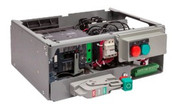
What is an MCC Bucket?
Posted by Derek Bray on 27th May 2026
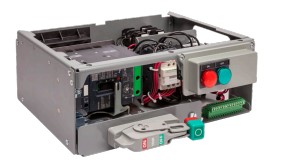
What Is an MCC Bucket? (Full Overview)
If you spend any time around industrial electrical equipment, especially motor control centers, you’ve probably heard someone say “this MCC bucket went bad” or “we need replacement bucket.” But what exactly is an MCC bucket, and why is it such an important piece of equipment?
Motor Control Center Basics
A Motor Control Center (MCC) is a centralized lineup of motor starters and control devices (Starer Buckets) used to operate motors or distribute power (Feeder Buckets) throughout a facility. Instead of installing individual starters and enclosed circuit breakers all over the building, an MCC groups them into organized vertical sections.
An MCC bucket—also known as a motor control unit (MCU)—is the removable, self‑contained unit that slides into one of those MCC sections. Think of it like a drawer in a cabinet, except this “drawer” houses all the components needed to start, stop, protect, and control a single motor or electrical load.
Main Components Inside an MCC Bucket
Most buckets include some combination of the following:
- Disconnecting Means
A circuit breaker or fused switch that provides overcurrent protection and allows the unit to be safely isolated. This is the primary safety device for the bucket.
- Motor Starter (when used for motor loads)
A typical starter assembly includes:
- Contactor – Electrically actuated switch that applies power to the motor
- Overload relay – Protects the motor from overheating due to excessive current
- Control transformer – Reduces incoming voltage to a standard control level (commonly 120V)
- Control Devices
Mounted on the door or inside the unit:
- Start/stop pushbuttons
- HOA (Hand‑Off‑Auto) switches
- Indicator lights
- Meters or status instrumentation
- Power Connections
- Stabs – Spring‑loaded or bolted connectors that plug into the MCC’s vertical bus
- Load terminals – Where outgoing motor or equipment wiring is landed
- Control Wiring
Internal wiring ties all components together and provides terminal points for field wiring, remote controls, and automation systems.
Types of MCC Buckets
Feeder Buckets
These contain only a disconnecting device and power connections. They distribute power to other equipment but do not include motor‑starting components.
Common uses include:
- Supplying remote panels
- Lighting circuits
- Auxiliary loads
- Transformer feeds
Starter Buckets
These include a motor starter plus the disconnect. Variations include:
- FVNR (Full Voltage Non‑Reversing) – Standard, one‑direction motor starter
- Reversing starters – Two contactors wired to reverse motor rotation, with interlocking
- VFD buckets – Contain a Variable Frequency Drive for speed control and soft starting
- Soft starter buckets – Solid‑state ramp‑up devices for reduced inrush current
- Combination starters – Starter and disconnect packaged together as a UL‑listed assembly
Bucket Sizes and NEMA Ratings
Buckets are built in standardized heights:
- 6" (small feeders)
- 12" (light loads and small motors)
- 18" (very common size)
- 24" (larger motors or VFDs)
- 36" (large starters or complex controls)
- 48" (high‑horsepower or multi‑component units)
Motor starters follow NEMA size ratings (0–6), which correspond to the horsepower and voltage they can handle. Larger NEMA sizes require taller buckets.
How an MCC Bucket Operates
A typical motor‑starting sequence looks like this:
- Press START – Energizes the contactor coil through the control circuit
- Contactor closes – Main contacts pull in and apply power to the motor
- Motor runs – Overload relay monitors current
- Press STOP – Coil de‑energizes and the contactor opens
- Overload trip – If current exceeds limits, the overload relay opens the circuit
Even with modern additions like PLCs or communication modules, the basic operation remains the same.
MCC Bucket vs. Motor Starter
A motor starter is just the electrical components (contactor, overload, etc.).
An MCC bucket is the complete plug‑in assembly that includes:
- The starter
- The disconnect
- The enclosure and door
- Stabs and terminals
- All internal wiring
You can mount a motor starter in any enclosure, but an MCC bucket is specifically engineered to fit into an MCC lineup.
Why Facilities Use MCC Buckets
- Centralized control – Everything is in one location
- Standardization – Interchangeable units from the same manufacturer
- Safety – Built‑in disconnects and overload protection
- Serviceability – Buckets can be removed without shutting down the entire MCC
- Code compliance – UL‑listed assemblies meet NEC requirements
- Cost efficiency – Shared bus structure reduces installation cost
Common Failure/Weak Points
- Contactor wear – Contacts burn or weld after heavy use
- Overload relay issues – Thermal or electronic failures
- Control transformer burnout – Often caused by shorts in control wiring
- Stab corrosion – Leads to heating and poor connections
- Door interlock problems – Mechanical wear prevents proper operation
- Circuit board/microprocessor failures in solid state devices
How to Identify Your MCC Bucket
When replacing or servicing a bucket, gather:
- MCC brand and model (e.g., Siemens Tiastar, Square D Model 6)
- Bucket height
- Bucket type (starter or feeder)
- Amperage rating
- Motor horsepower (if applicable)
- Voltage and control voltage
- Clear photos (front, interior, stabs, nameplate)
When to Repair or Replace?
Replace when:
- Enclosure is damaged or rusted
- Stabs are worn or corroded
- Multiple components have failed
- Bucket is obsolete
- You need to upgrade functionality (e.g., add a VFD)
Repair when:
- Enclosure is in good shape
- Only one or two components are bad
- Replacement buckets are expensive or hard to find
- Budget is limited
Typical MCc Bucket Cost Ranges
- Feeder bucket: $850–$2,000
- FVNR starter: $1,200–$3,500
- Reversing starter: $1,800–$4,500
- VFD bucket: $3,500–$12,000+
Lead times from OEMs often run 4–12 weeks, longer for custom builds. Lead times from our company are usually half of OEM lead times.
Summary
An MCC bucket is a removable, self‑contained motor control unit designed to plug into a motor control center. It houses the disconnect, starter (if required), control devices, wiring, and power connections in a standardized package.
Knowing the different bucket types, sizes, and components helps you troubleshoot issues, communicate with suppliers, and make smart decisions about repairs or replacements.
These units are the backbone of industrial motor control—until one fails, and then
Need a Replacement Bucket?
Select Equipment Co manufactures, reconditions and retrofits MCC buckets compatible with all major brands. We can build standard configurations in or custom solutions for any application.
Call 888-459-5191 or email sales@selectequipment.net with your bucket information.